

If you're wiring a guitar, replacing a pickup or building a custom control circuit, choosing the right solder can make the job considerably easier.
For most guitar wiring applications, a rosin-core electronics solder in a fine diameter is the best choice. For traditional guitar wiring, 60/40 tin-lead solder is popular because it melts easily and flows well. 63/37 tin-lead solder is another excellent option, particularly for technicians and builders who want a solder with a sharp melting point.
Lead-free solder can also be used for guitar wiring, but it generally requires more heat and can be less forgiving for beginners.
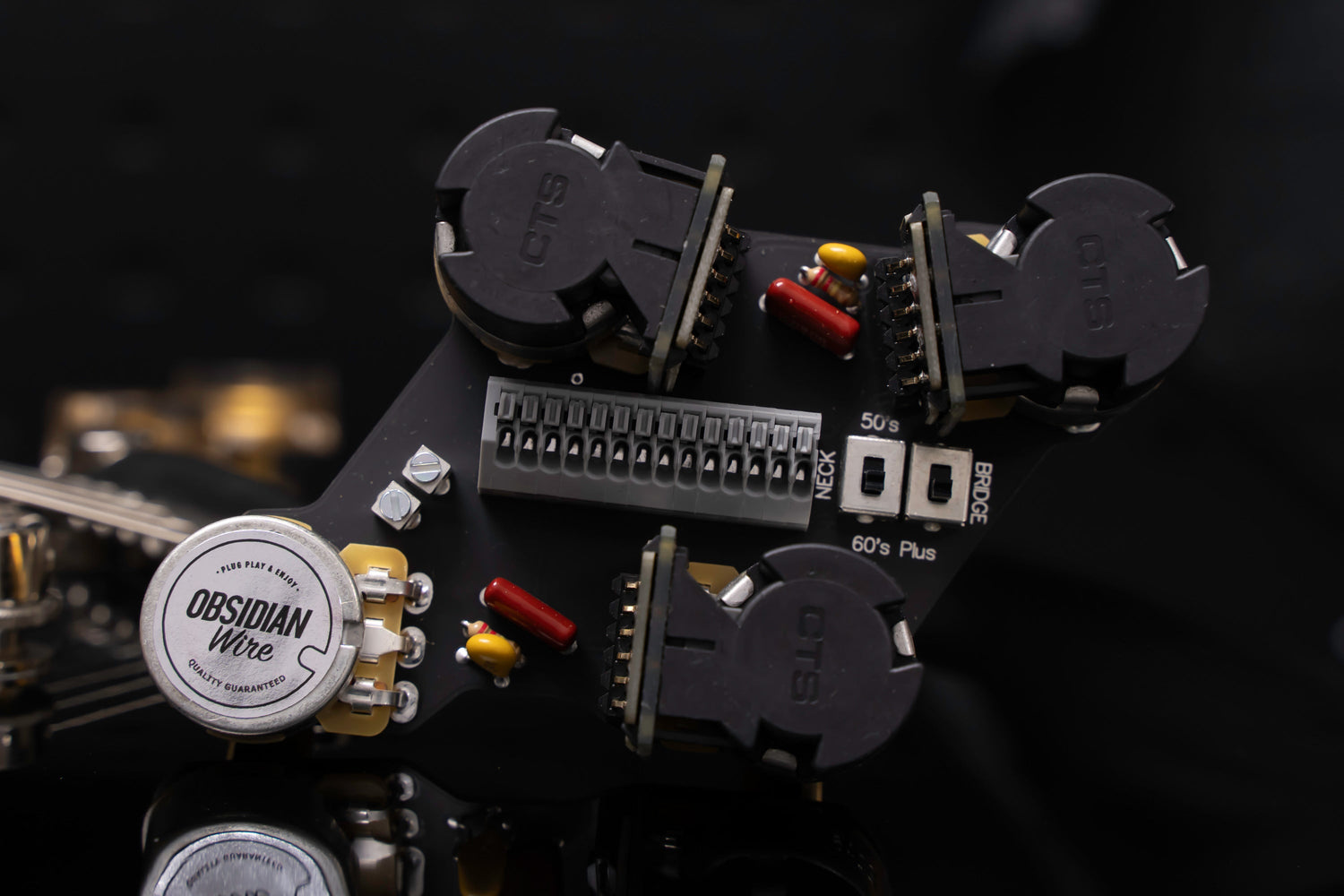
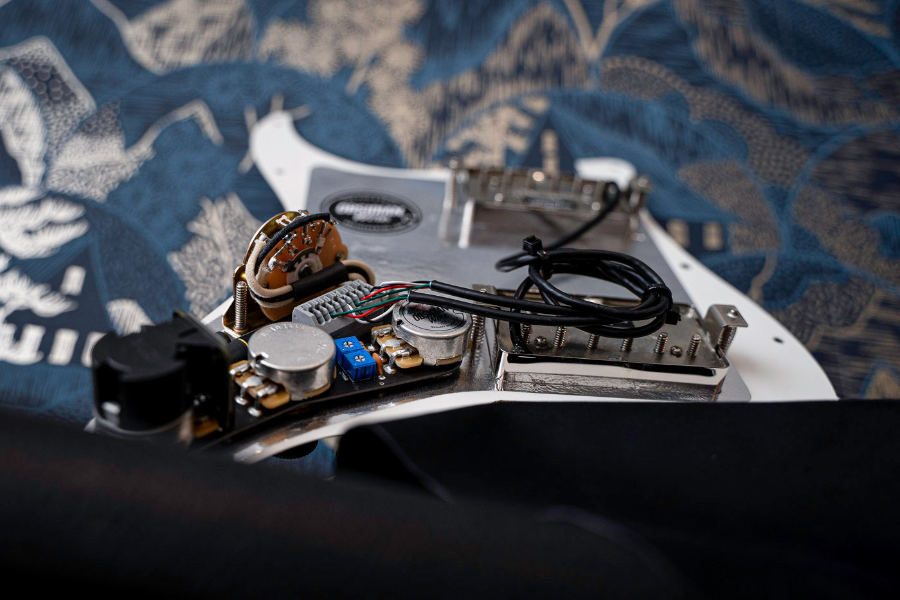
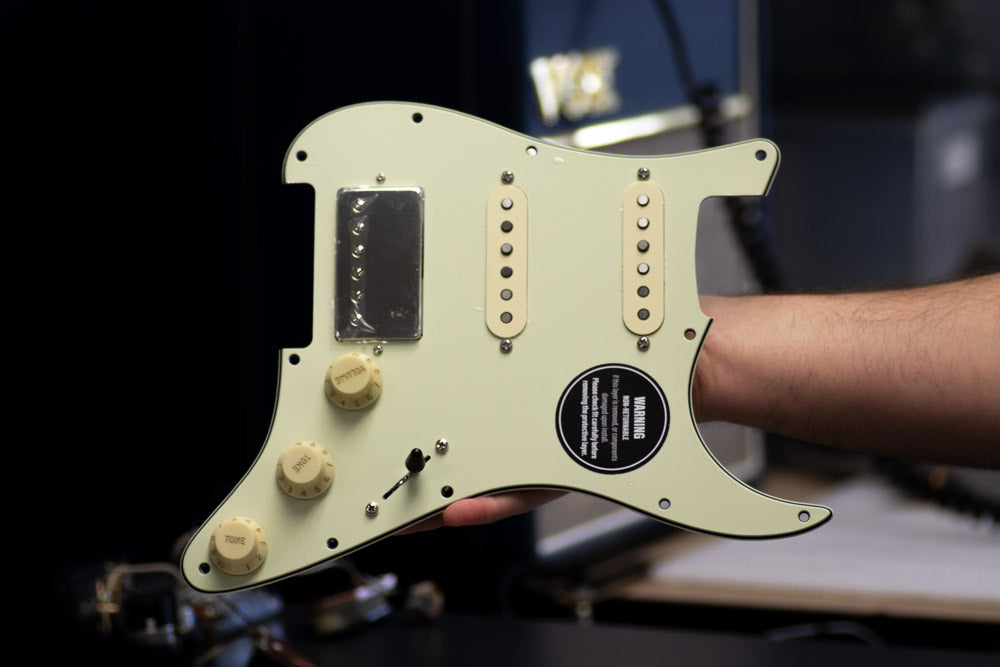
And if you'd rather avoid soldering altogether, a solderless guitar wiring harness such as the ObsidianWire solderless range provides another approach: professionally assembled guitar electronics with solderless pickup connections.
Quick Answer: What Is the Best Solder for Guitar Wiring?
For traditional guitar wiring, look for:
- 60/40 or 63/37 tin-lead solder
- Rosin-core or no-clean electronics flux
- Around 0.5–0.8 mm diameter for general guitar work
- A reputable electronics solder rather than plumbing or general-purpose solder
- A temperature-controlled soldering iron
- A reasonably fine, clean and well-tinned tip
For many guitarists, 63/37 Sn/Pb rosin-core solder around 0.6–0.8 mm is an excellent all-round choice.
63/37 solder is a eutectic alloy, meaning it transitions rapidly between solid and liquid at its melting point. This can make it particularly pleasant to work with when making small, precise electronic connections.
60/40 solder has a slightly broader melting range but is also extremely common and works very well for guitar electronics.
What Type of Solder Should You Use for Guitar Wiring?
The most important distinction isn't necessarily the brand of solder. It's choosing a solder designed for electronics.
1. Rosin-Core Solder
Rosin-core solder contains flux inside the solder wire.
Flux helps remove oxides from the surfaces being soldered and allows the molten solder to wet the connection properly.
This is exactly what you want when soldering:
- Pickup wires
- Potentiometers
- Capacitors
- Switches
- Output jacks
- Ground connections
- Shielding
- PCB connections
Electronics-grade rosin-core solder is designed for this type of work.
Avoid Plumbing Solder
Don't reach for plumbing solder simply because it happens to be sitting in the workshop.
Plumbing and electronics solder can use very different flux systems. Some plumbing fluxes are considerably more aggressive and are not appropriate for delicate electronic assemblies.
Use solder specifically intended for electronics.
60/40 vs 63/37 Solder for Guitar Wiring
Both are good choices for traditional guitar wiring.
| Solder | Composition | Melting Behaviour | Guitar Wiring |
|---|---|---|---|
| 60/40 | 60% tin / 40% lead | Melts over a small temperature range | Excellent |
| 63/37 | 63% tin / 37% lead | Eutectic, sharp transition | Excellent |
| SAC305 | Tin / silver / copper | Higher melting temperature | Good, but less forgiving |
| Other lead-free alloys | Various | Generally higher temperature | Suitable with appropriate technique |
60/40 Solder
60/40 is arguably the classic electronics solder.
It's easy to find, flows well and is very forgiving when you're learning.
For guitar repair, pickup installation and general electronics work, there's nothing wrong with using good-quality 60/40 solder.
63/37 Solder
63/37 is particularly attractive for professional electronics work.
It has a eutectic composition, meaning it changes rapidly from liquid to solid rather than passing through a relatively broad plastic range.
That characteristic can make it easier to produce clean joints and can reduce the time spent waiting for a joint to solidify.
Lead-Free Solder
Lead-free solder is increasingly common in professional electronics manufacturing.
SAC305, for example, is a tin/silver/copper alloy with a melting point around 217–219°C.
The higher melting temperature isn't necessarily a problem, but it places greater demands on your soldering iron, tip and technique.
What Solder Diameter Is Best for Guitar Wiring?
For most guitar work, 0.5–0.8 mm solder is a useful range.
A finer 0.5 mm solder gives you excellent control when working on:
- Pickup wires
- Small switches
- PCB connections
- Fine control wiring
Around 0.7–0.8 mm is a good general-purpose size for:
- Potentiometers
- Ground connections
- Switches
- Output jacks
- Larger guitar wiring joints
Very thick solder isn't necessarily better. It can simply make it easier to apply too much solder.
The objective is to use just enough solder to create a mechanically secure and electrically sound joint.
What Flux Should You Use for Guitar Wiring?
For most guitar electronics, choose a rosin or electronics-grade no-clean flux.
You generally don't need an aggressive acid flux.
No-clean flux can be particularly convenient when working inside a guitar because it can leave relatively little visible residue. However, "no-clean" doesn't mean you should deliberately leave large quantities of flux on the instrument.
If you've used additional liquid flux, clean the area appropriately according to the flux manufacturer's instructions.
What Solder Should Guitarists Use?
For the average guitarist doing a pickup replacement or wiring modification, I'd keep things simple.
Recommended Setup
Solder:
- 60/40 or 63/37 Sn/Pb
- Rosin-core
- Approximately 0.6–0.8 mm
Soldering iron:
- Temperature controlled
- Approximately 40–70 W is plenty for most guitar electronics
- A tip with enough thermal mass to heat the joint quickly
Tip:
- Small chisel or bevel tip rather than an extremely fine needle tip
- Keep it clean and tinned
The important thing is not simply maximum temperature.
You want to transfer enough heat into the joint quickly without cooking the component, insulation or PCB.
What Solder Should Professional Guitar Techs Use?
For a professional guitar technician, consistency becomes more important.
You're potentially soldering several guitars every week, so the choice of solder should complement your workflow.
A good professional setup might use:
- 63/37 electronics solder
- 0.5–0.8 mm diameter
- High-quality no-clean or mildly activated rosin flux
- Temperature-controlled soldering station
- Multiple tip sizes
- Brass wool or an appropriate tip cleaner
- Fume extraction
- Good lighting and magnification for small connections
A 63/37 solder can be particularly convenient for technicians because of its eutectic melting behaviour and predictable handling.
For high-volume work, however, your process matters at least as much as the alloy. Consistent stripping, tinning, heating and inspection will have a greater effect on reliability than choosing between two reputable brands of conventional electronics solder.
What Solder Should Guitar Builders Use?
For guitar builders, solder choice can depend on how much custom wiring you do.
If you're building one-off instruments, 60/40 or 63/37 solder remains an excellent choice.
If you're producing instruments repeatedly, consistency becomes increasingly important.
You may want to standardise:
- Solder alloy
- Solder diameter
- Flux type
- Iron temperature
- Tip geometry
- Wire preparation
- Inspection procedure
For builders who regularly install different pickups, there is another option worth considering: professionally assembled solderless electronics.
ObsidianWire's solderless range uses purpose-designed connectors and professionally assembled wiring, allowing compatible pickups to be connected without soldering the pickup connections.
What Solder Should Pickup Builders Use?
Pickup builders have some particularly delicate soldering jobs.
Pickup wire can be extremely fine, particularly on vintage-style pickups, so excessive heat can damage insulation or the coil connection.
A fine 0.5 mm or similar electronics solder can give you much better control than a thick general-purpose solder.
For pickup manufacturers and rewinding technicians, the key considerations are:
- Controlled temperature
- Short heating time
- Appropriate flux
- Fine solder diameter
- Secure mechanical positioning
- Strain relief
- Careful inspection
The goal isn't to make a huge shiny blob of solder.
A good connection should be small, properly wetted and mechanically secure.
Soldering Guitar Pots: An Important Tip
One of the most common guitar wiring jobs is soldering to the back of a potentiometer.
This is also one of the jobs that causes people the most frustration.
The back of a pot is a relatively large piece of metal compared with a small pickup wire. It can absorb a significant amount of heat.
Trying to solder it with an underpowered iron often results in:
- Solder refusing to flow
- A dull or lumpy joint
- Excessive heating time
- Melted insulation
- Damage to the potentiometer
Use a suitable tip with enough thermal mass to heat the area quickly.
Clean and lightly tin the surface, heat the pot casing and then introduce solder to the heated work rather than simply melting solder onto the iron.
General Guitar Wiring Soldering Tips
1. Tin the Wires First
Strip the insulation, twist the strands and apply a small amount of solder.
This is called tinning.
It holds the strands together and makes the final connection much easier.
Don't saturate the entire wire with solder.
2. Heat the Joint, Not the Solder
One of the most important soldering principles is:
Heat the components being joined and allow them to melt the solder.
Don't simply melt solder onto the iron and drip it onto the connection.
3. Use the Shortest Practical Heating Time
Guitar components aren't indestructible.
Excessive heat can damage:
- Pickup coil connections
- Pickup wire insulation
- Potentiometers
- Switches
- PCB pads
- Plastic components
A good solder joint should normally happen quickly once the parts are properly prepared.
If you're holding the iron on the joint for ten or fifteen seconds trying to make solder flow, stop and diagnose the problem.
You may need:
- A larger tip
- Better tip contact
- More flux
- A cleaner surface
- Higher thermal capacity
- Better mechanical positioning
Simply turning the temperature higher isn't always the answer.
4. Keep the Tip Clean and Tinned
A clean, lightly tinned soldering tip transfers heat much more effectively.
Don't allow the tip to sit dry and oxidised.
5. Don't Use Too Much Solder
More solder doesn't mean a better connection.
Excess solder can:
- Hide a poor joint
- Create accidental bridges
- Make troubleshooting harder
- Make the wiring unnecessarily bulky
- Increase the risk of shorts
Aim for a neat, compact joint.
6. Make the Connection Mechanically Secure First
Whenever practical, arrange the wires so they aren't relying on solder to physically hold everything together.
For example, a wire wrapped around a potentiometer lug should remain positioned on the lug before you solder it.
Solder should make the electrical connection — it shouldn't have to do all the mechanical work.
7. Don't Forget Guitar Grounds
Many guitar wiring faults aren't caused by the pickup signal wiring.
Ground connections are equally important.
Pay particular attention to:
- Pot casing grounds
- Bridge/string grounds
- Pickup grounds
- Output jack sleeve
- Shielding connections
A guitar can appear to work while still having a grounding problem that causes excessive hum or noise.
8. Test Before Reassembly
Don't put everything back together and then discover that the guitar has no output.
- Plug into an amplifier.
- Check every pickup position.
- Check volume controls.
- Check tone controls.
- Test switches and push/pulls.
- Check for unusual noise.
- Gently move the wiring to identify intermittent connections.
This can save a surprising amount of time.
What If You Don't Want to Solder Your Guitar Wiring?
This is where solderless guitar wiring becomes particularly interesting.
Traditional soldered wiring remains extremely useful. It's flexible, inexpensive and ideal for completely custom circuits.
But soldering inside a guitar can be fiddly, particularly when you're working through a small control cavity or trying to change pickups without damaging existing wiring.
ObsidianWire takes a different approach.
Its Pro-Wired™ solderless range uses purpose-designed connectors so compatible pickups can be connected to a professionally assembled wiring harness without soldering the pickup connections.
That can be particularly useful if you:
- Change pickups regularly
- Experiment with different pickups
- Work on multiple guitars
- Want a cleaner installation
- Don't own a soldering iron
- Don't want to learn to solder
- Build guitars for customers
- Want repeatable installations
The ObsidianWire range includes solderless solutions for configurations including Stratocaster, Telecaster, Les Paul, SG, Jazzmaster, HSS/HSH and bass guitars.
The FLEX-SERIES™ also allows compatible upgrades and modifications to be added using its click-in system without traditional soldering.
Explore ObsidianWire Solderless Guitar Wiring →
Traditional Soldering vs Solderless Guitar Wiring
| Feature | Traditional Soldered Wiring | ObsidianWire Solderless |
|---|---|---|
| Soldering required | Yes | No |
| Custom one-off circuits | Excellent | Depends on available configuration |
| Pickup changes | Requires soldering | Much easier with compatible pickups |
| DIY accessibility | Requires soldering skills | Designed for straightforward installation |
| Professional consistency | Depends on installer | Professionally assembled |
| Future modifications | Requires soldering | Compatible upgrades can be easier |
| Repairability | Extremely flexible | Depends on harness and connector system |
| Installation cleanliness | Depends on workmanship | Professionally assembled harness |
Neither approach is inherently right for every guitar.
If you're building a completely custom circuit from individual components, traditional soldering gives you enormous flexibility.
If you want a professionally assembled guitar electronics system that can be installed and modified without repeatedly soldering pickup connections, solderless wiring offers another option.
Does the Type of Solder Affect Guitar Tone?
This is one of the more common questions in guitar electronics.
In normal guitar wiring, the solder alloy itself isn't a meaningful tone-control component.
The important factors are the electrical characteristics of the circuit, including:
- Pickup characteristics
- Potentiometer resistance
- Tone capacitor value
- Wiring configuration
- Pickup loading
- Cable capacitance
- Switching configuration
A good solder joint should provide a reliable electrical connection.
Changing from one reputable electronics solder to another shouldn't be approached as a guitar tone upgrade.
The bigger difference is usually how well the connection is made.
So, What Is the Best Solder for Guitar Wiring?
For most traditional guitar wiring jobs, a good 63/37 or 60/40 rosin-core electronics solder around 0.5–0.8 mm is an excellent choice.
For hobbyists, 60/40 is inexpensive, easy to use and widely available.
For technicians and builders, 63/37 can be particularly attractive because of its eutectic melting behaviour and predictable handling.
For professional electronics manufacturing or situations where lead-free construction is required, alloys such as SAC305 are viable alternatives, although they require different temperature and process considerations.
But there's another question worth asking:
Do you need to solder your guitar wiring at all?
For compatible guitars and pickups, ObsidianWire's solderless guitar wiring provides a professionally assembled alternative, allowing you to install guitar electronics and make compatible pickup changes without traditional soldering.
For guitarists, techs and builders who regularly experiment with pickups and wiring, that can be just as important as choosing the right solder.
Frequently Asked Questions
What is the best solder for guitar wiring?
A good-quality 60/40 or 63/37 rosin-core electronics solder is an excellent choice for traditional guitar wiring. Around 0.5–0.8 mm diameter provides useful control for guitar electronics.
Is 60/40 or 63/37 solder better for guitar wiring?
Both work very well. 63/37 is eutectic and has a sharp transition between liquid and solid, while 60/40 is extremely common and easy to work with.
Can I use lead-free solder for guitar wiring?
Yes. Lead-free solder is suitable for guitar wiring, but it generally requires higher temperatures and can be less forgiving than conventional tin-lead solder.
What size solder should I use for guitar wiring?
Approximately 0.5–0.8 mm is a useful range. Finer solder provides more control for small connections, while around 0.7–0.8 mm is useful as a general-purpose guitar wiring solder.
Do I need rosin-core solder for guitar wiring?
Rosin-core solder is a very good choice because the solder contains electronics-friendly flux that helps the solder wet the connection.
Can I use plumbing solder on a guitar?
It's better to use solder specifically designed for electronics. Plumbing fluxes and solder products are not necessarily appropriate for delicate electronic connections.
Can I change guitar pickups without soldering?
Yes, if your guitar uses a compatible solderless wiring system. ObsidianWire solderless harnesses are designed to make compatible pickup changes possible without repeatedly soldering pickup wires.
Is solderless guitar wiring reliable?
A solderless system can be reliable when it uses appropriately designed connectors, quality components and proper assembly. ObsidianWire's solderless systems use professionally assembled harnesses and specified components.
Is solderless wiring better than traditional guitar wiring?
They're different approaches. Traditional soldered wiring offers maximum freedom for completely custom circuits, while solderless wiring can make installation, pickup changes and repeatable upgrades considerably easier.
What is the best soldering iron temperature for guitar wiring?
There isn't one universal setting because it depends on the solder alloy, iron and joint. The goal should be efficient heat transfer and a quick joint, rather than simply using the highest possible temperature.